
It's Cinco De Mayo!!!!!!!!!!
We started this class with a look at our packet to look at topics such as conjugate acids and bases to determine whether a solution is
acidic, basic, or neutral.
Let's take this reaction, for instance...
H20(l) + HF(aq) -------- H3O+(aq) + F-(aq)
We know HF is a weak acid and water can be both an acid or a base (though weak). In this case however, we know water would be the base because H3O+ is its conjugate acid - meaning it wants to give up a proton (it has that + charge it really wants to get rid of). We know the F- would be the conjugate base of HF, because F- wants to accept an extra proton (it has that - charge it really wants to get rid of). At this point you might be asking why I'm going on about this basic stuff (ba dum tss) when I could be talking about how salts dissolve. Isn't that what we discussed in class today? Why, yes it is. I am getting there.
I'll give you two examples and go through them step by step:
1. NH4Br
2. KClO4 (both of these are salts)
An aquoeous solution of a salt in water will be either acidic, basic, or neutral due to hydrolysis: either in the cation, anion, or both. Hydrolysis is when an ion reacts with water. These are ions that DO NOT hydrolize:
A. anion of a strong acid (negative charge=anion)
B. cation of a strong base (positive charge=cation)
ions that DO hydrolize:
A. anions and cations of weak acids and bases
Let's look at NH4Br again. It consists of NH4+ and Br-. Br- would not hydrolize because it is the anion of a strong acid (HBr). Therefore, you disregard it. Since NH4+ would react with water, because it is an ion of a weak acid/base, the formula would look like this:
NH4+(aq) + H20(l) -------- NH3(aq) + H3O+(aq)
We still must determine if this salt is acidic, basic, or neither. We now look at H2O. Notice how it is acting as the base in the relationship (because NH4+ is an acid). That means H3O+ would be the conjugate acid of H2O, and the conjugate acid of a weak base (such as water) would mean the salt NH4Br would form an ACIDIC solution in water.
Moving on to the next one, we see
that KClO4 would be neutral, because K+ is the cation of a strong base (KOH) and ClO4- is the anion of a strong acid (HClO4). Therefore, you can think of them as "canceling out".
You may use this logic to solve any other issue of this type you may run into. What I want you to absorb is not only that notecard you've been sleeping on, but also this:
1. Conjugate base of weak acid: basic solution
2. Conjugate acid of weak base: acidic
3. Conjugate base of strong acid or conjugate acid of strong base: neither
This is also helpful (this may be the exact same thing, but I'm not sure):
1. If cation comes from strong bas
e, and anion comes from strong acid, salt is neutral.
2. If cation is from strong base, and anion is from weak acid, salt is basic
3. If cation is from weak base, and anion is from strong acid, salt is acidic
4. If cation and anion are both weak, then you can't tell without knowing relative strengths of acid and base.
It's very much like an arm-wrestling match.
Next, we discussed how to do ICE tables for such salt equations. We were introduced to a new concept called the Kw (which is 1e-14). Basically, to find Ka or Kb of salt, you do Kw/Ka or Kb (given, opposite of what you need). You then complete the ICE table as normal. Remember that notecard with all the important conversions on it! I won't dive to deep into this because this isn't such a new concept (the notecard or the ICE table).
Then, we completed our day with a lab. Basically, this day was all about salts.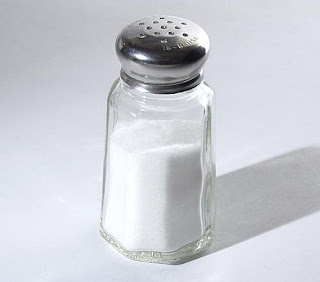
Not as unlucky as previously thought.
We started this class with a look at our packet to look at topics such as conjugate acids and bases to determine whether a solution is
acidic, basic, or neutral.
Let's take this reaction, for instance...
H20(l) + HF(aq) -------- H3O+(aq) + F-(aq)
We know HF is a weak acid and water can be both an acid or a base (though weak). In this case however, we know water would be the base because H3O+ is its conjugate acid - meaning it wants to give up a proton (it has that + charge it really wants to get rid of). We know the F- would be the conjugate base of HF, because F- wants to accept an extra proton (it has that - charge it really wants to get rid of). At this point you might be asking why I'm going on about this basic stuff (ba dum tss) when I could be talking about how salts dissolve. Isn't that what we discussed in class today? Why, yes it is. I am getting there.
I'll give you two examples and go through them step by step:
1. NH4Br
2. KClO4 (both of these are salts)
An aquoeous solution of a salt in water will be either acidic, basic, or neutral due to hydrolysis: either in the cation, anion, or both. Hydrolysis is when an ion reacts with water. These are ions that DO NOT hydrolize:
A. anion of a strong acid (negative charge=anion)
B. cation of a strong base (positive charge=cation)
ions that DO hydrolize:
A. anions and cations of weak acids and bases
Let's look at NH4Br again. It consists of NH4+ and Br-. Br- would not hydrolize because it is the anion of a strong acid (HBr). Therefore, you disregard it. Since NH4+ would react with water, because it is an ion of a weak acid/base, the formula would look like this:
NH4+(aq) + H20(l) -------- NH3(aq) + H3O+(aq)
We still must determine if this salt is acidic, basic, or neither. We now look at H2O. Notice how it is acting as the base in the relationship (because NH4+ is an acid). That means H3O+ would be the conjugate acid of H2O, and the conjugate acid of a weak base (such as water) would mean the salt NH4Br would form an ACIDIC solution in water.
Moving on to the next one, we see
that KClO4 would be neutral, because K+ is the cation of a strong base (KOH) and ClO4- is the anion of a strong acid (HClO4). Therefore, you can think of them as "canceling out".
You may use this logic to solve any other issue of this type you may run into. What I want you to absorb is not only that notecard you've been sleeping on, but also this:
1. Conjugate base of weak acid: basic solution
2. Conjugate acid of weak base: acidic
3. Conjugate base of strong acid or conjugate acid of strong base: neither
This is also helpful (this may be the exact same thing, but I'm not sure):
1. If cation comes from strong bas
e, and anion comes from strong acid, salt is neutral.
2. If cation is from strong base, and anion is from weak acid, salt is basic
3. If cation is from weak base, and anion is from strong acid, salt is acidic
4. If cation and anion are both weak, then you can't tell without knowing relative strengths of acid and base.
It's very much like an arm-wrestling match.

Next, we discussed how to do ICE tables for such salt equations. We were introduced to a new concept called the Kw (which is 1e-14). Basically, to find Ka or Kb of salt, you do Kw/Ka or Kb (given, opposite of what you need). You then complete the ICE table as normal. Remember that notecard with all the important conversions on it! I won't dive to deep into this because this isn't such a new concept (the notecard or the ICE table).
Then, we completed our day with a lab. Basically, this day was all about salts.

Not as unlucky as previously thought.


